
APPLICATION · MINING & CONSTRUCTION
Fuel Bladders for Mining and Construction
Fuel bladders and spill containment berms for temporary or remote sites. Share the exact fuel, storage volume, equipment layout, connections, site conditions and destination for review.
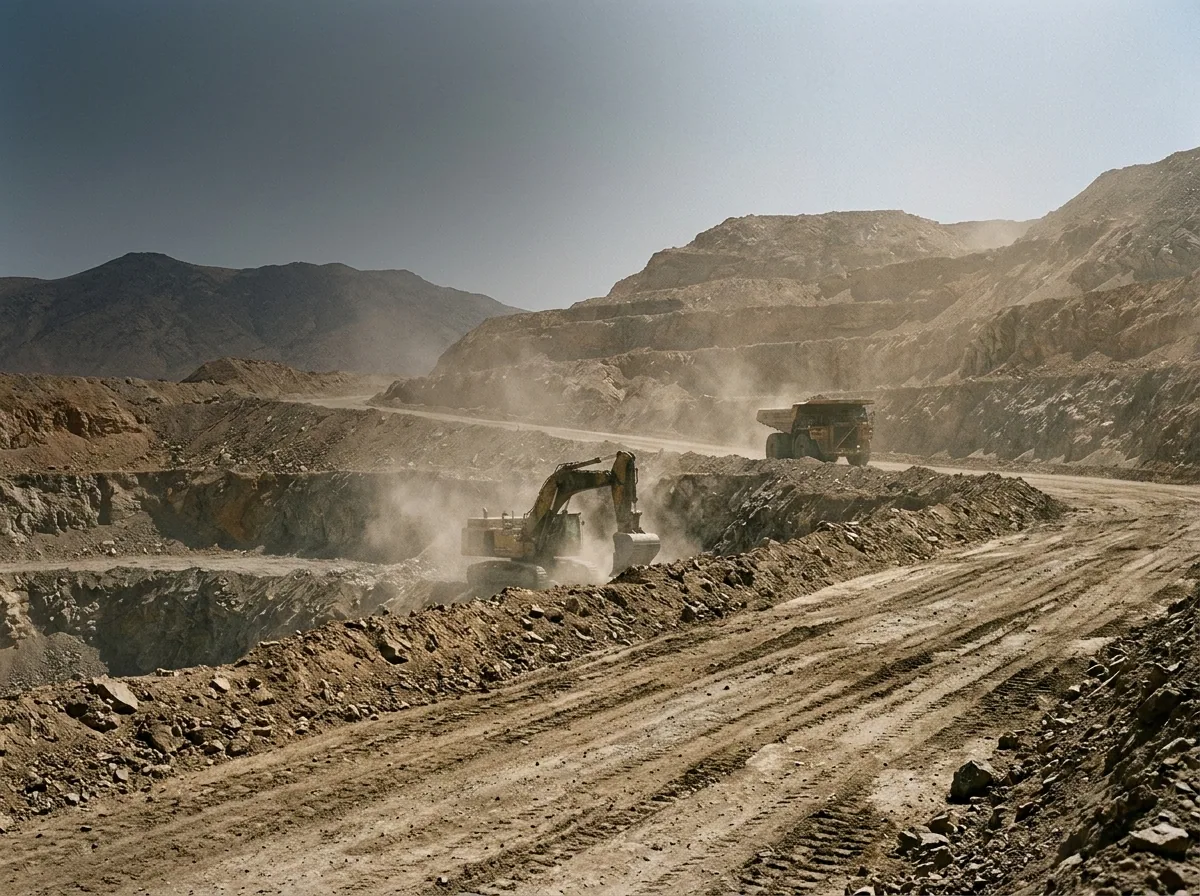
Plan Storage Around Site Operations
- Sites are often far from fixed fuelling infrastructure
- Continuous equipment operation requires a reliable fuel supply
- Rigid tanks are expensive to transport and relocate
- Project locations can change
- Filling and transfer areas need secondary containment
- Fittings must match existing pumps, hoses and equipment
- Available space, vehicle access and installation conditions are limited
Flexible fuel storage does not replace fixed tanks in every application. Suitability is reviewed for your fuel, site, project duration and applicable local requirements.
Typical Fuel Storage Configuration
Confirm bladder placement, fuel transfer, equipment access, secondary containment and delivery to the site, as well as capacity. Local permits, environmental controls and operating procedures remain the project team's responsibility.
Valve, Camlock and hose-connection requirements are confirmed against the customer's existing pump, hose and fuel-transfer equipment. Optional protective and handling components are confirmed against the project during quotation.
Configuration Principles
The following are confirmed for each project:
Exact fuel type
Required total capacity
Single bladder or multiple-bladder arrangement
Available installation footprint
Daily fuel consumption
Refilling method
Pump and hose connection
Inlet and outlet size
Vehicle access
Spill-containment footprint
Ground conditions
Ambient and operating environment
Project duration
Destination and transport method
These inputs guide the configuration review for your fuel, site and operating requirements.
Fuel Material Compatibility
Diesel
Polyester TPU is used for diesel applications and is not suitable for gasoline. Gasoline requires a polyether TPU configuration. The full material and product specification must be confirmed for the exact fuel and project conditions.
Gasoline
The polyether TPU formulation is confirmed for the exact gasoline and project conditions.
No single material is assumed to suit every fuel. Other fuels require separate compatibility confirmation, and spill-berm material compatibility with the exact liquid is also confirmed per project.
Site Planning
Planning-level considerations (not an installation manual):
Level the site
Level the site and remove sharp objects beneath the bladder to support the load evenly and reduce puncture risk.
Match the berm footprint
Match the berm footprint to the bladder and equipment to contain leaks and drips.
Plan access paths
Plan vehicle and equipment access for fuel delivery and transfer before deployment.
Position fittings
Position filling and dispensing fittings for short, accessible hose runs clear of vehicle traffic.
Allow room
Allow room to unfold, connect and inspect the bladder without repositioning it.
Inspect during use
Inspect fabric, seams and fittings regularly for wear or seepage.
Handle leaks promptly
Recover and handle leaked liquid promptly to maintain available containment capacity; follow applicable site requirements.
These points are for project planning and configuration only. They are not a substitute for a site-specific installation procedure, risk assessment or local regulatory review.
Why Use a Flexible System
Folds empty for transport
Reduces packed volume, transport cost and empty-storage space on site.
Suited to remote and project-based locations
Practical where fixed tank installations are impractical.
Configured to project capacity and fittings
Capacity and connection requirements confirmed against the site and equipment.
Pairs with secondary containment
Spill containment berms provide secondary containment around the bladder and transfer area.
Relocate or Store After Use
Folds flat for transport and storage.
Practical for temporary, mobile or phased projects
Suits changing project locations and durations.
Suitability depends on the fuel, site conditions, project duration and applicable local requirements.
Common Questions
Why use fuel bladders at mining or construction sites?
They fold empty for transport, are configured to project capacity and fittings, and suit remote or changing sites where fixed tanks are impractical.
Can the system be configured for diesel or gasoline?
Diesel uses polyester TPU; gasoline requires a polyether TPU configuration. The TPU formulation and complete configuration are confirmed separately for the exact fuel and project.
Why is a spill containment berm recommended?
It provides secondary containment around the bladder and transfer area, temporarily containing leaks or spills for recovery. It is not a primary storage tank or transport container.
How is the required fuel-storage capacity calculated?
An initial planning estimate can be based on verified daily fuel consumption multiplied by the planned number of days between replenishment, plus an operational reserve. Final capacity should also account for peak demand, delivery uncertainty, usable volume, equipment schedules, available site area, the preferred number of bladders and applicable local requirements. The project owner should confirm the required operating reserve and any legally required storage margin.
Can one large bladder be replaced by multiple smaller bladders?
Yes, multiple-bladder arrangements are possible and are reviewed against the site footprint, transport and handling.
What site information is needed before configuration?
Fuel type, capacity, daily consumption, available area, vehicle access, ground conditions, pump and fitting details, project duration and destination.
How are the bladders and berms packed for export?
Both fold flat and are prepared for export packing, with container loading coordinated for the destination.
What should be inspected during use?
Fabric, seams, valves and fittings, with regular checks during the project and prompt recovery and handling of any leaked liquid.
Local storage, environmental and safety requirements must be reviewed by the project owner.
Request a quote
Request a Mining Project Quote
Include the exact fuel, required storage volume, quantity, transfer connections, containment requirement and destination.
Request a Mining Project Quote