
APPLICATION · INDUSTRIAL SECONDARY CONTAINMENT
Portable Industrial Secondary Containment
Spill containment berms configured around the equipment footprint, wall structure, access pattern, required containment capacity and site conditions.
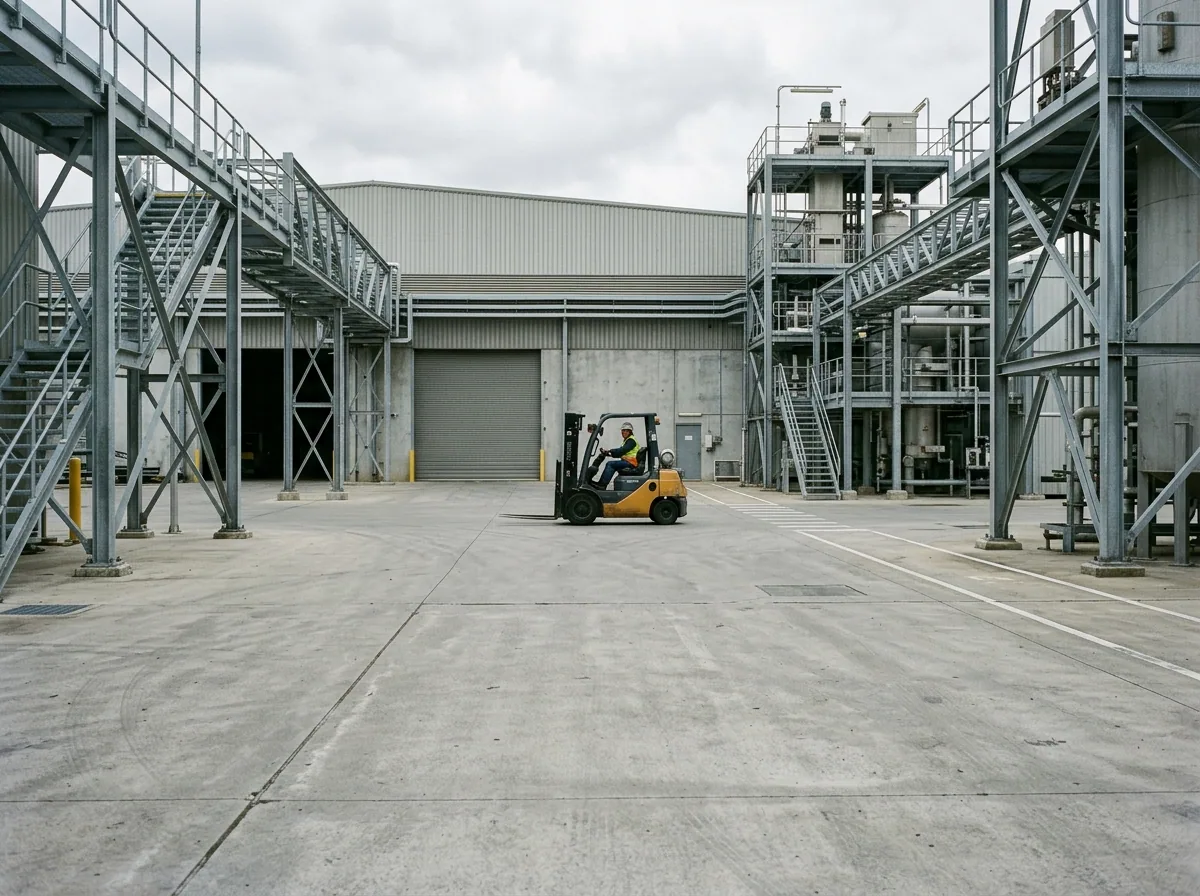
Containment and Access Requirements
- Fuel transfer and dispensing areas need spill control
- Drum and IBC storage can leak or drip over time
- Equipment laydown areas may collect oil and fluids
- Vehicle and tanker access points need drive-in containment
- Spills must be contained for recovery without contaminating the ground
- Site layouts differ: available area, access and traffic vary
- Containment requirements are often set by project or local rules
Containment and Access Requirements
The configuration below is typical for industrial containment; it is not a mandatory standard for every site.
Foam-wall berms (drive-in), For vehicle and equipment access areas where the structure must allow drive-in and drive-out movement.
Ground mats (optional), Protective mats (420 g or 500 g fabric) under and around the containment area, confirmed at quotation.
Liquid recovery planning, The site owner should plan how contained liquid will be recovered and handled. Any drain or recovery connection required from FUUSHAN must be confirmed separately at quotation.
Footprint and Containment Requirements
Confirmed per project:
Material and Use Requirements
Fuel and oil containment
Berms are manufactured in PVC, commonly selected for fuel and oil containment and considered for selected chemical applications.
Not a primary storage tank
Berms temporarily contain leaked or spilled liquid for recovery, but they are not primary storage tanks or transport containers.
Compatibility with the exact liquid, concentration, temperature and exposure conditions must be confirmed for each project. Local storage, environmental and safety requirements must be reviewed by the site owner.
Site Planning
Planning-level considerations (not an installation manual):
Confirm the footprint
Size the footprint for the full equipment layout, drum row or IBC bank.
Position for access
Position berms to keep filling, transfer and access activities within the containment footprint.
Plan drive-in paths
Plan protected drive-in and exit paths for vehicles and equipment.
Allow inspection space
Allow space to unfold the berm, inspect the perimeter and check seams without dismantling the layout.
Plan liquid recovery
Plan liquid recovery and handling before a spill reaches the berm's capacity.
Inspect fabric and seams
Inspect fabric and seams regularly for wear from traffic, weather or chemical exposure.
Review local requirements
Review wall height, footprint and spill volume against local containment, environmental and permit requirements.
These points are for project planning and configuration only. They are not a substitute for a site-specific installation procedure, risk assessment or local regulatory review.
Why Use Portable Containment
Portable and foldable
Foldable for relocation and redeployment as the site changes.
Multiple structures
Select the structure for the drums, IBCs, equipment or vehicles being contained.
Configurable Wall Height and Footprint
Size and wall height are confirmed against the containment target and site.
Drive-in foam-wall options
Foam-wall berms allow frequent vehicle access without dismantling the wall for each entry.
Compatibility confirmed against the liquids handled
Material compatibility is reviewed per project for the liquids handled.
Pairs with fuel storage systems
Coordinate primary fuel storage and secondary containment in one project where required.
Common Questions
What is secondary containment?
A second layer of protection that captures leaks, drips and spills from primary storage or handling, for example, a berm under drums, IBCs, equipment or vehicles.
What berm types are available?
Galvanized-steel pipe frame, L-bracket, foam-wall, soft sponge-wall and one-piece berms. The right type depends on the containment target and access needs.
Can vehicles drive into a berm?
Foam-wall berms are designed for drive-in use with frequent access. Other structures are selected by the containment and traffic requirements.
What is the maximum wall height?
Standard walls range from approximately 0.2 m to 0.7 m. Soft sponge walls are limited to 0.1 m, a production constraint that cannot be exceeded.
Can a berm be used as a primary liquid storage tank?
No. A berm is a secondary-containment product. It can temporarily contain leaked or spilled liquid for recovery, but it is not designed as a primary storage tank or transport container.
What materials are used?
PVC fabric with the appropriate support structure. Compatibility with the exact liquids, concentrations and conditions is confirmed per project.
How is a berm sized for drums or IBCs?
The footprint is confirmed against the storage layout and anticipated spill volume, with the structure selected by the containment target.
What information is needed for a quotation?
Containment target, liquids handled, footprint, wall height, access type, quantity, destination country and expected schedule.
Discuss Your Containment Requirements
We review the berm structure, wall height, material and packing scope.
Request an Industrial Berm Quote