
APPLICATION · AQUACULTURE & BIOFLOC
Fish Farming Tanks for Aquaculture and RAS
Galvanized-panel, pipe-frame and collapsible tanks configured for water volume, quantity, layout, outlets, site and destination. Biological design, stocking decisions and overall system commissioning remain with the project's aquaculture specialists.
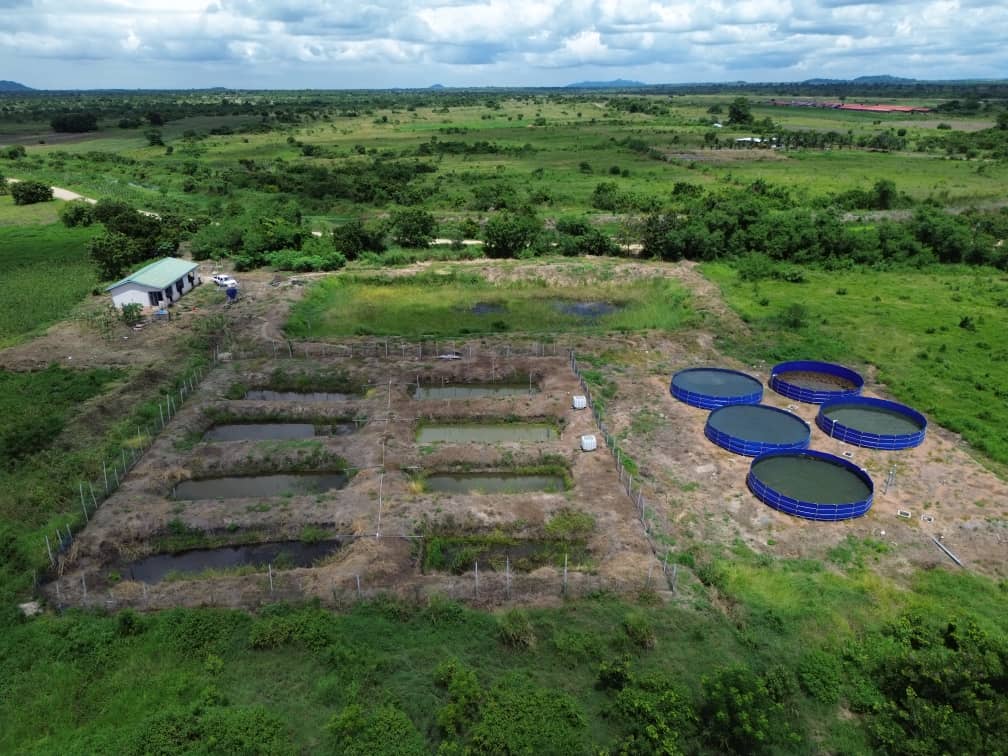
Tank Configuration Requirements
- Stocking plans need predictable tank volume and water depth
- Liners must hold water reliably against the frame structure
- Sites vary: ground level, access and available area differ per project
- Grow-out, nursery and biofloc systems have different water and density requirements
- Bottom drainage and water flow must match the farming system
- Transport and installation cost matters for multi-tank projects
- Capacity planning must match the species, season and production cycle
Tank and System Coordination
FUUSHAN uses this information to review the tank structure, dimensions, liner, fittings and packing scope. Water treatment, stocking density, species management, yield and complete RAS design are outside the product quotation unless separately documented.
Bottom valves or outlets are available; on-site installation by the customer is recommended to avoid transport damage. Tank port positions and connection requirements can be coordinated with the customer's aeration, RAS or biofloc system. Any separately supplied aeration equipment or system components must be confirmed at quotation.
Project Inputs
Confirmed per project:
Species and Stage: Grow-out, Nursery or Broodstock
Tank diameter and height
Number of tanks
Liner material and weight
Bottom drainage arrangement
Water flow and aeration system
Stocking density and planned volume
Site ground conditions
Available installation area
Transport and container packing
Destination and project schedule
For galvanized-sheet round tanks, the current reference range is approximately 3–11 m diameter, 0.95–2.8 m height and 7–266 m³ capacity. Pipe-frame and collapsible ranges are confirmed separately.
Material and Use Requirements
Water separation
The liner separates the water from the galvanized structure; liner selection is confirmed against the application and water conditions.
Potable-water use
Potable-water use is confirmed separately against the water source and required documentation; suitability is not assumed.
Food-contact statements apply only where confirmed for the specific project, for example, documented per delivery record. They are not a general claim for every order.
Site Planning
Planning-level considerations (not an installation manual):
Level the base
A sand base costs less; concrete provides greater stability. Choose based on tank size, ground bearing and long-term use.
Confirm ground bearing
Confirm ground bearing for the filled tank to address the risk of settling or distortion under load.
Plan delivery access
Plan delivery access for panels and liners to avoid additional handling.
Position tanks
Position tanks around water supply, drainage and aeration to support short, balanced RAS or biofloc flow paths.
Consider multi-tank layout
Allow access between tanks for drain inspection, fittings and routine service.
Confirm connections
Confirm power and water-system connections for aeration, pumps and RAS loops before filling.
Review local requirements
Review local aquaculture, discharge and permit requirements before filling.
These points are for project planning and configuration only. They are not a substitute for a site-specific installation procedure, risk assessment or local regulatory review.
Why Use This Tank System
Assemblable frame-and-liner construction
Can reduce the need for a permanent rigid tank shell.
Configurable diameter, height and liner
Configure volume, depth and liner for the species, system and stocking plan.
Grow-out, nursery, shrimp and biofloc
Suitable for these aquaculture projects, with liner, drainage and fittings reviewed against your water system.
Multi-tank projects planned around transport
Plan multi-tank orders around container packing and the volume your site can receive.
Land-based RAS project records
Project records documented in land-based RAS aquaculture.
Common Questions
What tank types can be used for fish farming?
Round tanks with galvanized-sheet walls, galvanized-pipe frames or collapsible structures, combined with flexible liners. The right type depends on the species, site and system.
What sizes are available for aquaculture?
For galvanized-sheet round tanks, the current reference range is approximately 3–11 m in diameter, 0.95–2.8 m in height and 7–266 m³ in capacity. Pipe-frame and collapsible ranges are confirmed separately.
Can the tanks be used for biofloc or RAS systems?
Yes. Biofloc and RAS are main application areas; fittings, water flow and system configuration are reviewed for each project.
What liner options are there?
Liner weight is commonly 560–650 g/m² (630 g/m² common), with material confirmed against the application. Potable-water use is confirmed separately.
Why are bottom valves installed on site?
Pre-installed bottom valves can be damaged by folded-liner compression during transport, so on-site installation by the customer is recommended.
How are tanks delivered for multi-tank projects?
Panels and liners are folded and packed for container transport; packing volume is calculated and documented for each order.
What information is needed for a quotation?
Species and production stage, diameter, height, quantity, liner requirements, drainage arrangement, site conditions, destination country and expected schedule.
Do the tanks come with installation instructions?
Configuration and delivery are confirmed per project; installation guidance is provided as applicable for the specific order.
Request a quote
Discuss Your Aquaculture Project
We will review the structure, dimensions, liner, outlets and packing information needed for quotation.
Request an Aquaculture Tank Quote